Why the Slow Things Are Quietly Winning
Valery Mays
September 28, 2026
For years, speed has been treated as an unquestionable advantage. Faster companies win. Faster technology wins. Faster delivery wins. Faster communication wins. We stream instead of waiting, message instead of writing, order instead of shopping, scroll instead of searching, and expect answers almost immediately. Anything slow can begin to feel inefficient, outdated, or unnecessarily difficult.
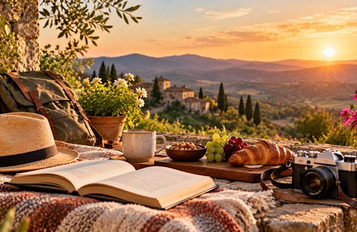
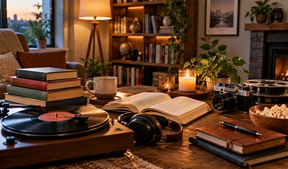
Yet something interesting is happening alongside all this acceleration. Many of the experiences people increasingly value are slow by nature. Long dinners. Printed books. Running. Gardening. Handmade objects. Vinyl records. Walking through cities. Cooking from scratch. Independent shops. Long-form conversations. Craftsmanship. Travel that involves actually staying somewhere. None of these things compete particularly well on speed, and that may be exactly why they matter.
Speed solved real problems
It is easy to romanticize slowness and forget how useful speed has been.
Faster communication makes businesses more efficient. Navigation apps save time. Online banking removes unnecessary trips. Medical information can move rapidly between professionals. Families separated by thousands of kilometers can speak instantly.
Convenience is not the enemy.
Nobody genuinely misses waiting three weeks for information that can now arrive in three seconds.
The problem begins when speed stops being a tool and becomes the default measurement of everything.
Not every experience improves when compressed.
Some things become worse.
Fast information created a hunger for depth
We now consume enormous amounts of information in tiny pieces.
Headlines.
Notifications.
Short videos.
Posts.
Messages.
Clips.
Screenshots.
The advantage is obvious: you can encounter hundreds of ideas in an hour.
The disadvantage is that very few receive sustained attention.
This helps explain why long-form formats have not disappeared despite repeated predictions that nobody has an attention span anymore.
People still listen to long podcasts.
They still read substantial books.
They still watch three-hour films.
They still spend hours learning about extremely specific subjects.
The appetite for depth did not vanish.
It became surrounded by more opportunities for distraction.
Physical books refuse to disappear
The death of printed books has been predicted repeatedly.
Digital reading is convenient.
Thousands of books can fit on one device.
Search is easy.
Text size can change.
Nothing needs to be carried.
Yet physical books remain attractive partly because of what they do not do.
A book does not receive notifications.
It does not contain another app one swipe away.
It does not suddenly remind you about an email.
It asks you to stay with one thing.
In a distracted environment, that limitation can become a feature.
Handmade objects mean something because they take time
Mass production made high-quality products dramatically more accessible.
That is a good thing.
But it also created renewed appreciation for objects where human effort remains visible.
Handmade ceramics.
Furniture.
Leather goods.
Clothing.
Jewelry.
Art.
People often value these objects precisely because they were not produced instantly.
Small irregularities become evidence of a process.
The time involved becomes part of the value.
When almost anything can be manufactured quickly, patience itself can begin to feel luxurious.
Slow food offers something delivery cannot
Food is one of the clearest examples.
Convenience food solves a genuine problem.
Sometimes you need dinner quickly.
But cooking can provide something efficiency cannot measure.
The chopping.
The smell.
The waiting.
The conversation while something cooks.
The satisfaction of turning basic ingredients into a meal.
A dinner that takes two hours to prepare is inefficient if the only objective is obtaining calories.
But that is rarely the only objective.
The process can be part of the experience.
Walking lets you see what speed hides
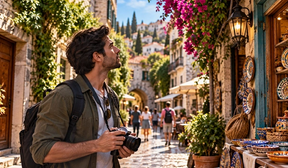
You understand a place differently when you walk through it.
Cars are excellent for reaching destinations.
Walking reveals what exists between them.
The bakery on the corner.
The architecture above eye level.
A small park.
People sitting outside cafés.
The way one neighborhood gradually becomes another.
Travelers often discover this accidentally.
They arrive with an itinerary filled with attractions and later remember the unplanned afternoon when they simply walked.
Slowness creates room for noticing.
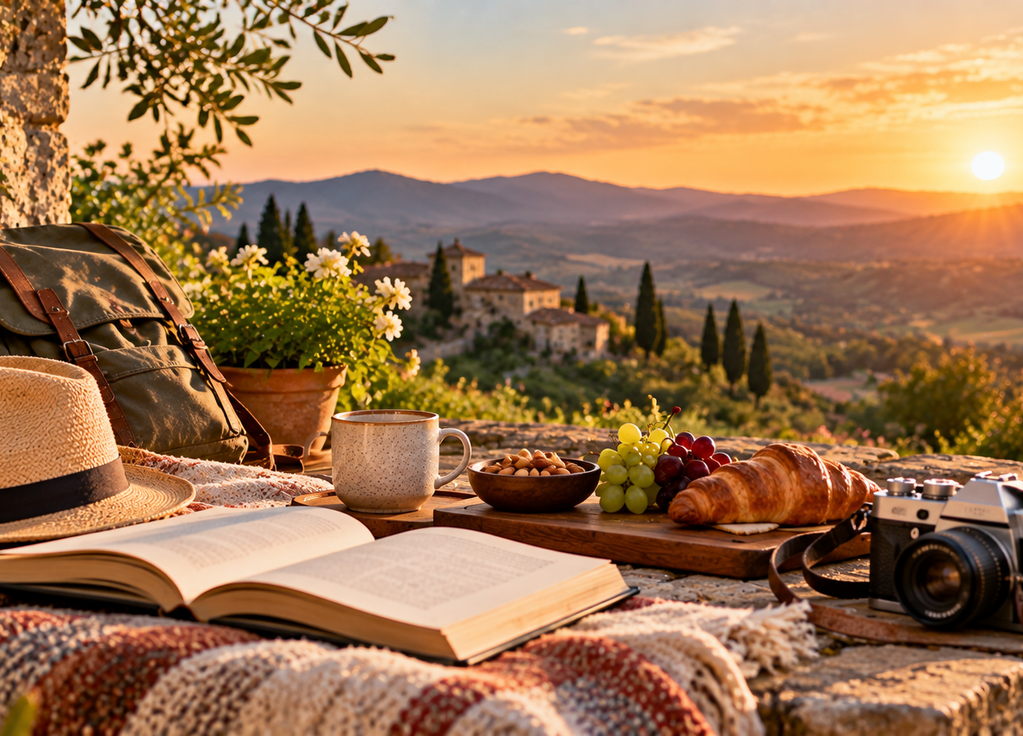
Slow travel is replacing checklist travel for some people
Traditional tourism often rewards quantity.
Five cities.
Seven days.
Twenty attractions.
Photos proving you were there.
The result can be a trip where you spend more time moving between places than experiencing them.
Slow travel approaches the problem differently.
Stay longer.
Visit fewer places.
Return to the same café.
Walk without a destination.
Shop at the local market.
Learn the rhythm of a neighborhood.
You see less geographically.
You may experience more deeply.
Relationships have always been slow
Technology can accelerate introductions.
It cannot accelerate intimacy in the same way.
Friendship requires repetition.
Trust requires evidence.
Love requires time.
You learn someone gradually through ordinary experiences: conversations, disagreements, shared meals, difficult periods, boring afternoons, celebrations, and years of accumulated context.
There is no efficient shortcut to knowing another person deeply.
Relationships are built from repeated presence.
That makes them almost radically slow compared with the rest of modern life.
Expertise is still stubbornly slow
Technology can help you learn faster.
It can explain concepts instantly, translate material, organize information, provide examples, and help you practice.
But real expertise still requires time.
Musicians need hours with instruments.
Athletes need repetitions.
Writers need years of writing.
Doctors need experience.
Designers need to develop judgment.
Managers need to encounter difficult situations.
Information can be delivered instantly.
Judgment cannot.
Knowing something and becoming good at something remain different processes.
Slow businesses can build strong foundations
Startup culture often celebrates extraordinary growth.
Launch quickly.
Scale quickly.
Raise quickly.
Expand quickly.
Sometimes that strategy produces remarkable companies.
It can also create businesses that grow faster than their foundations.
Customer service deteriorates.
Culture becomes chaotic.
Costs expand.
Products lose focus.
Some businesses take another path.
They grow from revenue.
They understand their customers deeply.
They hire carefully.
They improve gradually.
Their progress may look unimpressive from month to month.
After ten years, the accumulated result can be substantial.
Slow growth is not always better.
But speed is not automatically evidence of strength either.
Craft cannot always be rushed
Some work improves because someone spent longer on it.
A good editor rereads.
A carpenter measures again.
A chef waits.
A photographer watches the light.
A writer rewrites the paragraph.
A designer removes another unnecessary element.
From the outside, this can look inefficient.
But the time is not necessarily wasted.
It is part of how quality emerges.
The difficulty is that modern workplaces often measure visible speed more easily than invisible thought.
Boredom is becoming strangely valuable
There was once much more unavoidable boredom.
Waiting rooms.
Bus rides.
Queues.
Commercial breaks.
Sitting somewhere while waiting for a friend.
Now almost every empty moment can be filled.
That sounds like progress.
But boredom also created space for thought.
Your mind wandered.
You noticed things.
Ideas appeared.
You processed conversations.
You imagined.
When every empty moment is immediately occupied by content, those spaces disappear.
Choosing not to fill them can feel uncomfortable at first.
Eventually, the silence becomes useful.
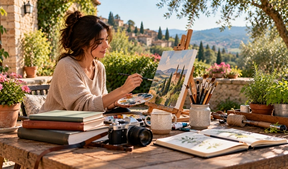
Slow hobbies are returning for a reason
Gardening.
Knitting.
Pottery.
Baking.
Painting.
Running.
Woodworking.
Photography.
Reading.
These hobbies often produce something, but production is not always the point.
They demand attention without demanding constant urgency.
You cannot force a plant to grow faster because you are impatient.
Clay does not care about your inbox.
Bread still needs time.
Running requires putting one foot in front of another repeatedly.
These activities offer a different relationship with time.
Slow things create anticipation
Instant access removes waiting.
That is usually convenient.
But waiting sometimes created pleasure.
Looking forward to a new album.
Waiting for photographs to be developed.
Planning a trip for months.
Waiting for a weekly episode.
Saving for something you really wanted.
Anticipation extends an experience beyond the moment of consumption.
When everything is immediately available, we gain convenience but sometimes lose that buildup.
The pleasure becomes shorter.
Scarcity of attention makes slowness feel premium
In an economy where almost everything is competing for attention, giving someone your uninterrupted attention becomes increasingly meaningful.
A long conversation without checking your phone.
A handwritten letter.
A carefully prepared dinner.
An afternoon spent with one person.
A book read without simultaneously checking messages.
These experiences feel valuable partly because attention has become scarce.
Time has always been limited.
What changed is how aggressively others compete for pieces of it.
Algorithms are fast; taste is slow
Algorithms can recommend music, films, restaurants, products, books, and destinations almost instantly.
They are useful.
But personal taste develops differently.
Taste requires exposure.
Comparison.
Mistakes.
Changing your mind.
Discovering what you dislike.
Returning to something years later.
A recommendation system can tell you what people similar to you enjoyed.
It cannot completely replace the process of becoming someone with preferences of your own.
Taste develops through time and attention.
Slow does not automatically mean good
There is nothing noble about unnecessary delay.
A slow bureaucracy is still frustrating.
A slow website is annoying.
A slow emergency response can be dangerous.
Waiting months for something that could reasonably take days is not meaningful slowness.
The point is not that slow is always better.
The point is that speed should be applied selectively.
Use speed where speed removes friction.
Protect slowness where slowness creates value.
The best lives probably contain both
You can use technology to save time and then deliberately spend that time slowly.
Order groceries online and use the saved hour to walk with someone you love.
Automate financial administration and spend Sunday cooking.
Use fast communication for logistics and long conversations for relationships.
Use AI to remove repetitive work and spend more time thinking about the difficult parts.
Efficiency should create room.
Otherwise, we simply use every efficiency improvement to fit more activity into the same day.
The slow things are not really winning because they are slow
They are winning because they offer things speed cannot produce.
Depth.
Attention.
Craft.
Anticipation.
Memory.
Trust.
Mastery.
Presence.
These qualities require time because time is part of what creates them.
The future will almost certainly become faster. Technology will continue removing friction from ordinary life, and many of those improvements will be welcome.
That may make deliberate slowness more valuable rather than less.
When everything can happen immediately, choosing to spend an hour doing one thing becomes unusual.
When information arrives instantly, understanding becomes the slower challenge.
When communication is constant, uninterrupted presence becomes rare.
When almost anything can be produced quickly, craftsmanship stands out.
The slow things are quietly winning because they remind us of something speed occasionally makes us forget.
Time is not always an obstacle to get around.
Sometimes time is the ingredient.