How to Actually Focus in a World That Won’t Let You
Veda Tyler
September 28, 2026
Focus used to be mostly an internal problem. You sat down to work and tried not to daydream. Today, distraction has become an entire industry. Your phone vibrates, your inbox updates, group chats continue all day, news never ends, social platforms refresh infinitely, and almost every digital product has been designed to give you a reason to return. Even when nobody interrupts you, the possibility of interruption sits a few centimeters away.
That makes concentration less about possessing extraordinary willpower and more about protecting your attention. You cannot control every distraction around you, but you can decide which ones receive immediate access to your mind. The ability to focus is increasingly valuable precisely because the environment makes it difficult. Learning to concentrate is no longer simply a productivity trick. It is a way of deciding what deserves your time.
Stop expecting yourself to resist everything
Many people try to focus while keeping every distraction available.
The phone sits beside the laptop.
Email remains open.
Notifications appear in the corner of the screen.
Twenty browser tabs wait nearby.
Then they blame themselves for getting distracted.
This is like trying to eat healthier while keeping your favorite snacks directly in front of you all day.
Willpower can help, but environment usually wins eventually.
Make distraction inconvenient.
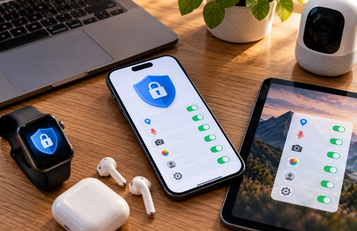
Put your phone somewhere you cannot reach automatically.
Close messaging apps.
Turn off unnecessary notifications.
Keep only the tabs required for the current task open.
Do not make concentration harder than it needs to be.
Decide what deserves your attention before starting
You cannot focus effectively if you do not know what you are supposed to focus on.
“Work” is too vague.
“Finish the introduction and first two sections of the report” is clearer.
Before beginning a focused session, define what success looks like.
Perhaps you need to review five pages.
Prepare three slides.
Analyze one spreadsheet.
Write 500 words.
Specific targets give attention somewhere to land.
Otherwise, you may spend the first 20 minutes moving between tasks while feeling productive without actually progressing on anything important.
Work on one thing at a time
Multitasking feels efficient because several activities appear to be happening simultaneously.
Usually, your attention is switching between them.
You write two sentences.
Check a message.
Return to the document.
Answer an email.
Read another paragraph.
Check the phone.
Each switch has a cost.
Your brain needs to remember where you were, what you were thinking, and what comes next.
For complex work, repeated switching can destroy momentum.
Choose one primary task and allow it to remain primary long enough for your mind to settle into it.
Give yourself uninterrupted blocks of time
Important work rarely fits comfortably into the small spaces between interruptions.
If you have a meeting in 15 minutes, you probably will not begin the hardest part of a major project.
Protect larger blocks when possible.
Thirty minutes can help.
An hour is better for many demanding tasks.
Ninety minutes can be extremely productive when your energy allows it.
The exact number is less important than the boundary.
During that period, you are not available for every incoming request.
You are available for the thing you already decided matters.
Treat notifications as requests, not commands
A notification creates an artificial sense of urgency.
Something appears.
You feel compelled to look.
But most notifications do not require immediate action.
Someone liked something.
A newsletter arrived.
A group chat has new messages.
An app wants you to return.
A store has a promotion.
These are requests for your attention.
You are allowed to decline them.
Turn off notifications that do not genuinely need to interrupt you.
For the remaining ones, remember that receiving information does not automatically create an obligation to respond immediately.
Check communication intentionally
Constantly monitoring email and messages creates fragmented attention.
Instead, consider checking communication at natural intervals.
You might review messages after completing a focused block.
You might process email several times throughout the day rather than every few minutes.
This will not work for every job. Some roles genuinely require rapid responses.
But even then, there may be periods where you can temporarily reduce availability.
The goal is not becoming unreachable.
It is preventing every other person’s timing from automatically becoming your timing.
Put your phone physically away
Turning your phone face down is better than staring at the screen.
Putting it across the room is better.
Putting it in another room can be even better.
Physical distance interrupts automatic behavior.
Many people reach for their phones without consciously deciding to do so.
They encounter a difficult paragraph.
Phone.
A page loads slowly.
Phone.
A thought becomes uncomfortable.
Phone.
Moving the device creates enough friction to expose the habit.
Now checking requires an actual decision.
Learn to tolerate boredom again
Modern technology has made it possible to eliminate almost every empty moment.
Waiting for an elevator?
Phone.
Standing in line?
Phone.
Sitting on a train?
Phone.
Waiting for someone at a restaurant?
Phone.
The result is that the brain becomes accustomed to constant stimulation.
Then focused work feels unusually slow.
Practice allowing some moments to remain empty.
Walk without checking your phone.
Wait in line without opening an app.
Drink coffee without simultaneously consuming content.
You are rebuilding your tolerance for having one experience at a time.
That tolerance transfers surprisingly well to concentration.
Do the hardest work when your brain is strongest
Not every hour contains the same quality of attention.
Some people think clearly early in the morning.
Others are better later.
Notice your pattern.
Use your strongest period for tasks requiring writing, analysis, strategy, problem-solving, or creativity.
Do not automatically spend your best mental hours answering routine emails.
Save lower-energy periods for administrative tasks when possible.
Managing attention is partly about matching the difficulty of the task to the quality of your energy.
Create a starting ritual
Focus becomes easier when your brain recognizes a familiar transition into work.
The ritual can be extremely simple.
Make coffee.
Clear the desk.
Put the phone away.
Open the document.
Put on headphones.
Start a timer.
Repeated consistently, these actions become cues.
You are teaching your brain that a particular sequence means it is time to concentrate.
The ritual should not become another elaborate form of procrastination.
You do not need 45 minutes of preparation to work.
The best ritual gets you into the task quickly.
Capture distracting thoughts instead of following them
Sometimes the distraction comes from inside your own head.
You suddenly remember that you need to buy something.
You think of someone you need to message.
You remember an appointment.
You get an idea for another project.
Instead of immediately acting on the thought, write it down somewhere reliable.
Then return to the current task.
This reassures your brain that the thought will not be lost.
A simple capture list can prevent dozens of small mental interruptions from becoming full detours.
Make your workspace boring in the right way
A good workspace does not need to look like a minimalist design magazine.
It simply needs to make the intended behavior obvious.
If you are writing, the document should be the most visually available thing.
If you are studying, the material should be ready.
If you are reading, the book should be accessible.
Remove unnecessary visual competition when it distracts you.
The environment should quietly answer the question, “What am I supposed to be doing here?”
Stop using breaks as opportunities for infinite scrolling
Breaks are important.
But not every break restores attention equally.
If you spend ten minutes rapidly consuming dozens of posts, videos, headlines, and messages, your brain may return to work more stimulated rather than refreshed.
Try breaks that actually create separation.
Stand up.
Stretch.
Walk.
Drink water.
Look outside.
Talk briefly with someone.
Let your eyes move away from the screen.
A break should ideally make returning to concentration easier.
Protect sleep
Focus becomes much harder when you are tired.
Sleep deprivation affects attention, memory, emotional regulation, and decision-making.
Yet people sometimes try to solve exhaustion with more productivity techniques.
No app can fully compensate for a brain that needs sleep.
If your concentration is consistently poor, examine whether you are getting enough rest before concluding that you simply lack discipline.
Sometimes the most effective productivity decision happens the night before.
Reduce the number of things competing for your mind
Attention can become fragmented even without digital distractions.
Too many unfinished projects create mental noise.
You are thinking about the presentation, the email, the trip, the bill, the meeting, the document, and the task you forgot yesterday.
Use external systems.
Write things down.
Keep a calendar.
Maintain a realistic task list.
Decide which projects are active and which are not.
Your brain is much better at thinking than at constantly remembering dozens of obligations.
Give unfinished tasks somewhere else to live.
Accept that deep focus can feel uncomfortable
Concentration is not always pleasant.
Difficult work creates moments of uncertainty.
You may not know what to write next.
You may encounter a problem you cannot immediately solve.
You may become bored.
That moment is where many people escape into distraction.
Instead, stay with the discomfort slightly longer.
Read the paragraph again.
Think.
Try another approach.
Write the imperfect sentence.
Focus is partly the ability to remain present after the work stops being immediately rewarding.
Stop measuring productivity by responsiveness
Modern work often rewards visible activity.
Fast replies.
Constant Slack messages.
Immediate email responses.
Back-to-back meetings.
These behaviors make you look busy because other people can see them.
Deep work is quieter.
You might disappear for two hours and produce something that matters far more than 40 quick responses.
Being available every second is not the same as being effective.
Sometimes your most valuable work requires temporarily becoming less responsive.
Create periods when nobody can reach you instantly
You do not need to disappear for an entire day.
Even 30 or 60 minutes of protected time can make a major difference.
Use do-not-disturb mode.
Close email.
Silence messaging apps.
Tell colleagues when necessary that you are focusing and will respond afterward.
Most things can wait.
And when something genuinely cannot wait, you can create a specific emergency channel rather than treating every communication channel as an emergency channel.
Train concentration gradually
If your attention currently feels scattered, expecting yourself to suddenly perform three hours of uninterrupted deep work is unrealistic.
Start smaller.
Focus for 20 minutes.
Then 30.
Then 45.
Take deliberate breaks.
Gradually increase the duration.
Concentration behaves somewhat like a skill.
It becomes easier when practiced consistently.
You are training yourself to stay with one thing longer before seeking stimulation elsewhere.
Do not optimize every second
There is a strange contradiction in modern productivity culture.
People become so focused on maximizing every minute that they lose the ability to simply experience time.
Not every walk needs a podcast.
Not every meal needs a video.
Not every commute needs an educational audiobook.
Not every spare five minutes needs to become productive.
Unstructured time gives the mind room to process, wander, notice, and recover.
Protecting attention also means allowing yourself periods when attention does not need to accomplish anything.
Focus is ultimately about choosing
Every day, hundreds of things compete for your attention.
Messages.
News.
Entertainment.
Work.
Family.
Friends.
Advertisements.
Algorithms.
Ideas.
Responsibilities.
You cannot give full attention to all of them.
That means focus is not only the ability to concentrate.
It is the willingness to exclude.
When you choose to work deeply on one thing, you are temporarily ignoring everything else.
That can feel uncomfortable in a culture built around constant availability.
But without exclusion, meaningful concentration becomes almost impossible.
The solution is not becoming someone who never gets distracted. Everyone gets distracted.
The skill is noticing the distraction sooner and returning.
Put the phone away. Silence what does not matter. Define the task. Work on one thing. Protect enough time for your mind to settle. Let yourself become bored occasionally. Rest properly. Return when your attention wanders.
The world will probably continue trying to interrupt you.
Focus begins when you stop giving everything permission to succeed.