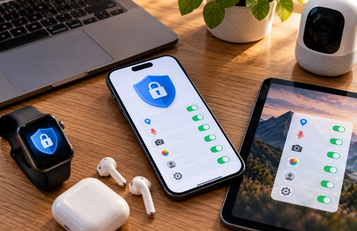
The Quiet Power of Rising Above the Noise
Creed Vaughn
October 9, 2026
Modern life is loud even when the room is silent. There are messages waiting for replies, headlines demanding reactions, opinions arriving from strangers, workplace conversations continuing after working hours, and endless streams of people explaining what we should buy, believe, achieve, fear, or care about next. The noise is not only literal sound. It is the constant pressure of information competing for a place in our minds.
Rising above that noise does not mean disappearing from the world or becoming indifferent to what happens around you. It means developing enough distance to decide what deserves your attention before everything else decides for you. In a culture that rewards immediate reactions, there is quiet power in becoming harder to distract, provoke, rush, and influence.
Not everything deserves a response
One of the easiest ways to become overwhelmed is to treat every incoming message, opinion, criticism, or disagreement as something that requires an answer. It usually does not. Some conversations matter because they involve people you care about, responsibilities you hold, or decisions that genuinely affect your life. Others simply appear in front of you.
Learning the difference changes everything. You do not need to correct every misunderstanding, defend yourself against every minor criticism, or participate in every argument. Sometimes the most intelligent response is to continue with your day. Silence is not always weakness. Sometimes it is evidence that you know where your energy belongs.
Urgency is often manufactured
Modern communication makes almost everything look immediate. Messages arrive instantly, so people begin expecting instant responses. News updates constantly, creating the feeling that you need to know what happened five minutes ago. Workplace tools show unread numbers and red notification badges that quietly suggest something important is waiting.
But urgency and importance are not the same thing. Many things that feel urgent can wait an hour, an afternoon, or even a day without meaningful consequences. Creating a small pause between receiving something and responding to it gives you the chance to decide whether the urgency is real or simply part of the delivery system.
The loudest opinion is not automatically the best one
Confidence attracts attention. Certainty sounds persuasive. People who speak quickly, frequently, and forcefully can appear more knowledgeable than people who take time to think. Yet volume is not evidence, and confidence is not accuracy.
Some of the most thoughtful people hesitate because they understand complexity. They ask questions before reaching conclusions. They change their minds when new information appears. They are comfortable saying they do not know. These qualities can look less impressive in environments built around instant opinions, but they often produce better judgment over time.
You do not need an opinion about everything
The internet has created an unusual expectation that everyone should have immediate positions on events they discovered five minutes ago. Something happens, and almost instantly people are expected to explain what it means, who is responsible, and what should happen next.
There is another option: wait. Read more. Learn the context. Listen to people who understand the subject. Decide that the issue is outside your knowledge and leave it there. “I don’t know enough about this yet” is one of the most useful sentences available to an adult. It protects you from confusing speed with understanding.
Protect the beginning of your day
The first minutes after waking can determine the mental tone of the morning. If the first thing you do is open messages, news, email, and social media, you immediately enter other people’s priorities. Before you have decided what matters today, dozens of people and systems are already offering suggestions.
You do not need an elaborate morning routine. Even a short period without incoming information can help. Drink coffee, shower, eat breakfast, walk, exercise, or simply get ready before entering the stream. Give your own mind a chance to arrive before inviting the entire world inside.
Create distance from constant commentary
There is a difference between experiencing something and immediately consuming commentary about it. You can watch a film and decide what you think before reading reviews. You can visit a restaurant without checking what everyone else ordered. You can listen to an album without immediately looking at rankings and reactions.
Independent judgment needs a little space. When commentary arrives too quickly, it can shape your interpretation before you have formed one. Sometimes it is worth asking yourself a simple question first: What did I think before I learned what everyone else thought?
Stop treating your phone like an emergency device
Most phones are designed to remain close enough that they can interrupt almost anything. They sit beside us while we work, eat, watch films, exercise, talk, and sleep. Even when silent, their presence can create the expectation that something new might be waiting.
Physical distance helps. Leave the phone in another room while working. Keep it away from the dinner table. Walk occasionally without checking it. Charge it somewhere other than beside your pillow if that works for you. The goal is not to reject technology. It is to restore moments when your attention is not permanently available for interruption.
Choose whose opinions earn access to you
Not every opinion deserves equal emotional weight. A thoughtful comment from someone who knows you well is different from a careless remark from someone who barely knows you. Professional feedback from someone experienced in your field is different from anonymous criticism. Advice from someone living a life you respect deserves different consideration from advice offered casually.
One of adulthood’s quieter skills is learning whose voices belong in your internal conversation. If everyone receives equal access, your decisions become crowded by people who do not understand your circumstances and will not live with the consequences.
Comparison is another form of noise
Sometimes the noise does not tell you what to think. It tells you where you should be in life. Someone bought a house. Someone received a promotion. Someone is traveling. Someone started a company. Someone became extremely fit. Someone appears to have an impossibly beautiful family and kitchen.
Individually, none of these things needs to be harmful. The problem comes when hundreds of unrelated lives are compressed into one feed and your brain begins treating them as a single standard you are somehow supposed to match. You are comparing your one life with the combined highlights of thousands of others. That is an impossible competition.
Know what enough looks like
Noise becomes especially powerful when you do not have your own definition of enough. Without one, there is always another milestone available. More money, more recognition, more followers, more possessions, more travel, more productivity, more achievement.
Enough does not mean abandoning ambition. It means knowing what the ambition is for. If you know which relationships, experiences, responsibilities, and goals genuinely matter to you, outside signals become easier to evaluate. You can pursue more without assuming that more is automatically better.
Quiet people are not necessarily passive
There is a tendency to associate power with visibility. The person speaking most must be leading. The person posting constantly must be succeeding. The person with the strongest opinion must be confident. But much of real influence operates quietly.
People build expertise privately. They create strong relationships without documenting them. They make difficult decisions without announcing them. They save money without displaying wealth. They practice skills when nobody is watching. They solve problems before those problems become visible.
Not everything valuable produces a public signal.
Slow decisions can be strong decisions
Some decisions need speed. Most do not. When the stakes are significant, allowing yourself time can prevent emotion from becoming strategy. Sleep on the purchase. Reread the email tomorrow. Consider the job offer for another day. Wait before responding to something that made you angry.
A pause creates separation between stimulus and action. That separation gives judgment room to enter. Many regrets begin with a decision made while the emotion was still louder than the reasoning.
Protect periods of deep work
Noise is particularly expensive when you are trying to create something difficult. Writing, designing, planning, studying, analyzing, and solving complicated problems require enough uninterrupted time for the mind to settle into them.
If you allow messages and notifications to break that concentration every few minutes, the work becomes shallower. Protecting focused time can therefore be an act of professional seriousness. You are deciding that producing something meaningful deserves temporary priority over appearing continuously available.
Let some people misunderstand you
Trying to control everyone’s perception of you is exhausting. You explain your decisions, defend your boundaries, clarify your intentions, and attempt to make sure nobody develops an inaccurate impression. It rarely works completely because people interpret your behavior through their own experiences.
Sometimes you have to let a misunderstanding exist. If the relationship matters, clarify what needs clarification. If it does not, continuing to explain yourself may simply give the situation more importance. Peace often requires accepting that you cannot manage every version of yourself that exists in other people’s minds.
Build a life that does not need constant display
When an experience happens, there can be an immediate impulse to document it. The meal, the trip, the workout, the celebration, the view, the achievement. Sharing can be enjoyable and meaningful, but not every good moment needs an audience.
There is a particular kind of satisfaction in having parts of your life that exist only for the people who were there. A dinner nobody photographed. A walk nobody tracked. A personal achievement you did not announce. Privacy gives experiences a different texture because they do not need to perform for anyone outside them.
Silence creates room for original thought
If every spare moment is filled with podcasts, videos, music, messages, and scrolling, your mind spends much of the day receiving. There is little space left for processing. Silence can initially feel uncomfortable because the brain has become accustomed to stimulation, but that discomfort often passes.
Walk without headphones occasionally. Drive without immediately turning something on. Sit somewhere without checking the phone. These moments give unfinished thoughts room to develop. Creativity often needs periods when nothing new is arriving.
Calm is not the absence of problems
Rising above the noise does not mean creating a perfectly peaceful life. Work will become stressful. People will disappoint you. Plans will change. Difficult conversations will happen. News will be disturbing. Responsibilities will occasionally arrive all at once.
The goal is not to eliminate external disorder. It is to reduce how automatically external disorder becomes internal disorder. You can acknowledge that something is difficult without allowing it to occupy every corner of your attention.
Decide what deserves to be loud
Some things should interrupt you. A person you love needs help. Your child wants your attention. An important deadline requires action. A serious problem needs to be confronted. A meaningful opportunity appears. Rising above the noise does not mean becoming detached from everything.
It means clearing enough unnecessary noise that you can hear the signals that actually matter. When everything is treated as important, genuinely important things struggle to stand out.
The quieter life is not necessarily the smaller life
There is a misconception that stepping away from noise means withdrawing from ambition, culture, technology, or the world. It can mean the opposite. Less distraction can create more room for meaningful work, deeper relationships, stronger ideas, better health, greater creativity, and experiences you actually remember.
A quieter life can still contain enormous goals. It simply does not require constant commentary about them. You can build privately, think slowly, choose carefully, and allow results to speak when they are ready.
Rising above the noise is really about choosing what gets inside
The world is unlikely to become quieter. Technology will continue becoming better at reaching us. There will be more information, more entertainment, more opinions, more alerts, more recommendations, and more reasons to check what happened while we were looking away.
The solution cannot be waiting for everything else to calm down.
It has to involve becoming more selective.
You do not need to know everything immediately. You do not need to answer everyone instantly. You do not need to participate in every conversation, defend every decision, follow every trend, or react to every opinion. You can choose which voices deserve your attention and which ones can continue without you.
That choice may look small from the outside. There is nothing dramatic about closing an app, ignoring an argument, putting your phone away, taking another day to decide, or spending an evening without knowing what everyone else is talking about.
But repeated over a lifetime, those choices create something powerful: a mind that increasingly belongs to the person living inside it.