The Quiet Return of Real-Life Hobbies
Landry Malone
September 28, 2026
For a while, it seemed as though every spare moment was becoming digital. We watched television while scrolling through our phones, listened to podcasts while walking, checked messages while waiting for coffee, and filled small gaps in the day with endless streams of content. Even hobbies increasingly moved onto screens. Gaming, streaming, social media, online communities, and digital creation gave people enormous new ways to spend their free time.
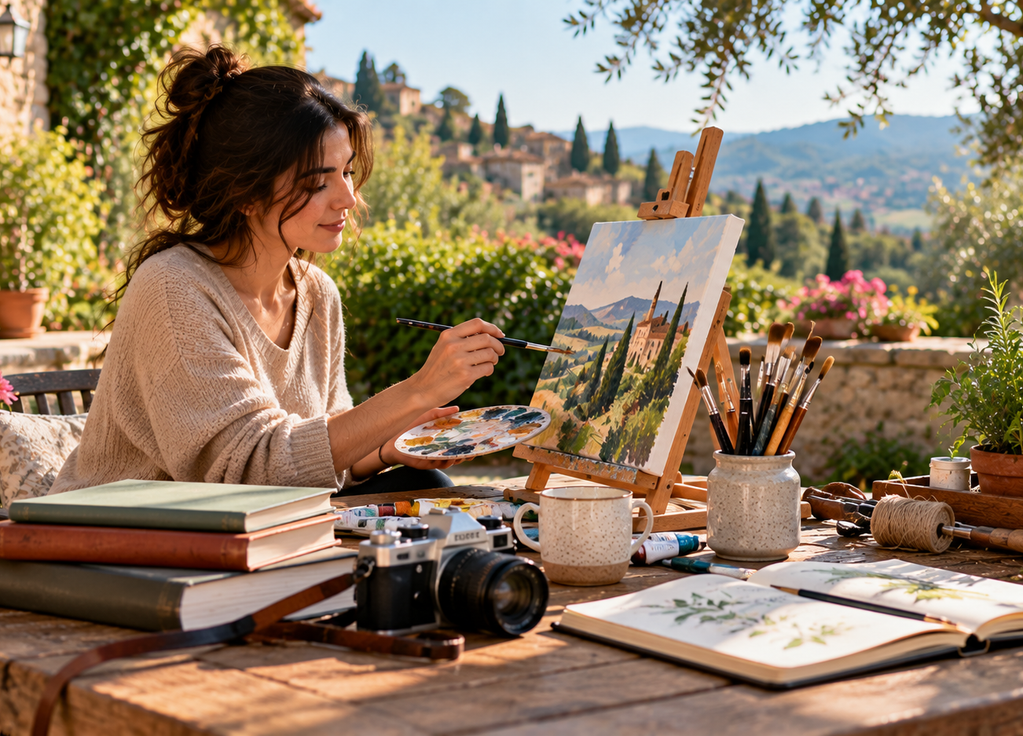
But alongside all that technology, something quieter has been happening. People are returning to hobbies that involve their hands, bodies, neighborhoods, kitchens, gardens, cameras, books, instruments, and other people. Running clubs are becoming social spaces. People are learning pottery, baking bread, knitting, gardening, painting, repairing furniture, shooting film photography, joining book clubs, playing chess, hiking, cooking, and collecting physical objects. These activities are not new. Their renewed appeal comes partly from how different they feel from the rest of modern life.
People are tired of spending the entire day on screens
For many people, work already requires hours in front of a computer. Communication happens through messaging apps. Banking happens on a screen. Shopping happens on a screen. Entertainment happens on a screen. Even exercise can involve watching another screen.
By evening, opening another app may not feel like relaxation anymore.
A physical hobby creates a clear change of environment. Your hands are doing something different. Your eyes are looking at something other than pixels. Your attention is directed toward an object, movement, place, or person in front of you.
That distinction can feel surprisingly refreshing.
Real hobbies produce a different kind of attention
Digital platforms are designed around rapid switching. One post becomes another. One video leads immediately to the next. There is rarely a natural stopping point.
Many traditional hobbies behave differently.
When you knit, you stay with the same object. When you paint, you remain with the same image. When you garden, you return to the same plants. When you run, you move through one continuous physical experience.
The activity gives attention somewhere stable to rest.
That does not automatically make every hobby relaxing. Learning something difficult can be frustrating. But the frustration is focused.
You are struggling with one thing instead of being stimulated by 50 unrelated things.
Making something feels different from consuming something
A large portion of modern leisure is consumption.
Watch.
Scroll.
Listen.
Browse.
Order.
Read.
There is nothing inherently wrong with consuming entertainment. Great films, music, books, games, and online content can enrich life enormously.
But making something produces a different kind of satisfaction.
A loaf of bread exists because you made it.
A scarf exists because you knitted it.
A photograph exists because you noticed the moment.
A plant survived because you cared for it.
A song sounds better because you practiced it.
The result does not need to be impressive.
The pleasure comes partly from participating rather than observing.
People are rediscovering the pleasure of being bad at something
Adult life can become strangely performance-oriented.
At work, competence matters.
Online, people display polished results.
Even leisure can become competitive through metrics, followers, rankings, and public comparison.
A hobby can offer permission to be mediocre.
You can paint badly.
Play three chords.
Bake an ugly cake.
Run slowly.
Take imperfect photographs.
Grow tomatoes that refuse to cooperate.
Nothing catastrophic happens.
This can be deeply freeing.
Not every activity needs to become evidence that you are talented.
The best hobbies do not need to become businesses
The internet has created extraordinary opportunities for people to turn hobbies into income.
It has also created pressure to monetize almost everything.
You start making ceramics.
Someone says you should sell them.
You take beautiful photographs.
Someone suggests starting a business.
You bake well.
People ask when you are opening a bakery.
Sometimes monetization is exactly what someone wants.
But money changes the relationship with an activity.
Once customers, deadlines, pricing, marketing, and expectations enter the picture, a hobby can become work.
There is something valuable about doing something that has no economic objective.
Physical objects are becoming appealing again
Books.
Vinyl records.
Film cameras.
Notebooks.
Board games.
Printed photographs.
These objects never completely disappeared, but they feel newly meaningful in a world where so much exists only digitally.
Physical objects create boundaries.
A record contains an album.
A book contains one text.
A notebook does not send notifications.
A board game requires everyone to gather around the same table.
Their limitations are part of the attraction.
They offer experiences that do not immediately lead somewhere else.
Hobbies create natural communities
One of the strongest reasons real-world hobbies are appealing is that they create social interaction without requiring socializing to be the entire purpose.
Joining a running club is easier than attending an event where the only activity is talking to strangers.
Everyone already has something to do.
The same applies to book clubs, climbing gyms, pottery classes, dance lessons, community gardens, amateur sports teams, photography walks, and language groups.
The activity removes some of the pressure.
Conversation happens around something.
Friendships can develop gradually through repeated contact.
Repeated contact is how many friendships actually form
Adult friendship can be difficult because people lack the environments that created friendships earlier in life.
School provided repeated contact.
University provided repeated contact.
Early jobs often did too.
Later, people become busy, move cities, start families, or work remotely.
Hobbies can recreate that structure.
You see the same people every Tuesday.
You run together every Saturday.
You attend the same class.
You gradually recognize faces.
Then names.
Then personalities.
Friendship often grows less from one extraordinary conversation than from dozens of ordinary encounters.
Running clubs show what people are looking for
The popularity of social running groups illustrates something larger than enthusiasm for running.
They combine exercise, routine, community, outdoor time, and low-pressure social interaction.
People arrive for different reasons.
Some want to become faster.
Some want friends.
Some want structure.
Some simply want a reason to leave the house.
The running matters, but the social ritual matters too.
Modern hobbies increasingly function as informal community infrastructure.
Craft hobbies offer visible progress
Many forms of modern work are abstract.
You answer emails.
Attend meetings.
Edit documents.
Update spreadsheets.
Move information between systems.
At the end of the day, you may have worked for eight hours without seeing a physical result.
Craft hobbies provide the opposite experience.
You begin with materials.
You do something.
The object changes.
Progress is visible.
That direct relationship between effort and result can be extremely satisfying.
Gardening operates on a completely different clock
Gardening may be one of the most anti-internet hobbies possible.
You cannot refresh a plant.
You cannot increase playback speed.
You cannot force a seed to become a tomato tomorrow.
You prepare the soil, provide water and light, and wait.
Progress happens gradually.
That pace can be frustrating, but it also reconnects people with processes that cannot be optimized indefinitely.
Some things require seasons.
Cooking is becoming a hobby again
Cooking occupies an unusual position because it is both necessary and optional.
You need to eat.
You do not necessarily need to make fresh pasta, learn bread techniques, perfect a curry, or spend Sunday afternoon preparing a complicated meal.
That extra effort transforms cooking from a chore into a hobby.
The kitchen becomes a place for experimentation.
You learn techniques.
Repeat recipes.
Adjust ingredients.
Feed other people.
The reward is immediate and social.
You make something, and then everyone eats it.
Hobbies provide identity outside work
One of the dangers of career-focused culture is that professional identity can consume everything else.
Ask someone who they are and the first answer often involves a job title.
But work is only one part of a person.
Someone can also be a runner.
A guitarist.
A gardener.
A reader.
A climber.
A photographer.
A chess player.
A cook.
These identities matter because they create alternative sources of progress and belonging.
A bad week at work feels different when work is not the only place where you recognize yourself.
Hobbies create memories that scrolling rarely does
Think about what you remember from the last year.
You may remember a hike.
A dinner you cooked with friends.
A football match.
A pottery class.
A weekend spent painting a room.
A long bike ride.
A book you discussed with someone.
You probably remember far fewer individual scrolling sessions.
Digital entertainment can be enjoyable in the moment without producing strong memories afterward.
Real-world hobbies often involve place, effort, people, sensory details, and novelty.
Those ingredients give memory more to hold onto.
There is satisfaction in gradual improvement
A hobby creates a relationship with time.
At first, you cannot do something.
Then you can do it badly.
Then slightly better.
Eventually, something that once required intense concentration becomes automatic.
That progression is satisfying precisely because it cannot be downloaded instantly.
You earn it through repetition.
Modern technology can give us information immediately.
Skill still develops slowly.
That makes improvement feel meaningful.
Not every hobby needs to be productive
People sometimes choose hobbies using the same logic they use for work.
Will this improve my fitness?
Will this teach me a useful skill?
Can I monetize it?
Will it look good online?
Will it help my career?
Those can be reasonable benefits.
But they do not need to be the point.
A hobby can exist because Tuesday evenings are more enjoyable when you do it.
That is enough.
Leisure does not need to justify itself through productivity.
Social media can still support real hobbies
The return of offline hobbies is not necessarily a rejection of technology.
The two can support each other.
Someone discovers a hiking route online and then spends six hours outside.
A person learns a knitting technique from a video and spends the evening making something.
A running group organizes through an app and meets physically.
A photographer shares work online but takes the photographs while walking through the city.
The useful distinction is not always digital versus physical.
It is whether technology leads you back into life or continually keeps you inside the feed.
The hobby does not have to be impressive
People sometimes hesitate to start because they imagine a hobby needs to become part of their personality.
You do not need expensive equipment.
You do not need to become an expert.
You do not need an Instagram account dedicated to it.
You do not need to tell anyone.
Buy a cheap sketchbook.
Borrow a racket.
Grow three herbs.
Walk with a camera.
Join one class.
Cook one unfamiliar dish.
Read one book.
Start small enough that curiosity can lead.
Real-life hobbies give time a shape
Without deliberate activities, free time can disappear.
You finish work.
Sit down.
Check your phone.
Watch something.
Scroll.
Suddenly it is midnight.
Nothing terrible happened.
But the evening feels strangely absent.
A hobby creates an event inside ordinary time.
Wednesday becomes the night you play football.
Saturday morning becomes the running group.
Sunday afternoon becomes cooking.
Those recurring rituals give weeks texture.
They create things to anticipate and remember.
We may be rediscovering something obvious
People have always needed activities that exist outside necessity.
We make things.
Collect things.
Play games.
Tell stories.
Grow plants.
Explore places.
Compete.
Practice.
Read.
Cook.
Sing.
Move.
Technology did not remove those instincts.
It simply became extraordinarily good at occupying the same free time.
The quiet return of real-life hobbies may therefore be less of a trend than a correction.
After years of having unlimited entertainment available at every moment, people are remembering that being entertained and being engaged are not exactly the same thing.
Sometimes the best evening is not the one where the algorithm found the perfect thing for you to watch.
It is the one where you forgot to check your phone because you were busy doing something else.